
Last updated: May 29, 2026
Quick Answer: The best self-care gifts for stress relief in 2026 combine sensory comfort, practical mental health support, and personalization. Weighted blankets, mindfulness subscriptions, nervous system regulation tools, and experience-based gifts consistently outperform generic spa sets. Budget matters less than fit — a $25 journal chosen thoughtfully beats a $100 bath bomb set that collects dust.
Key Takeaways
- Weighted blankets ($50–$150) are among the most clinically supported stress relief gifts available [3]
- 92% of Americans prefer experiences over physical items, making wellness subscriptions and retreats top-tier gift choices [1]
- The best self-care gifts match the recipient’s lifestyle — not just a trend
- Mental health professionals favor gifts that build habits, not just one-time relief
- Gifts under $50 can be just as effective as expensive options when chosen strategically
- Men and women generally respond to different self-care formats — personalization is key
- Subscription boxes offer ongoing value but require vetting for quality and relevance
- Avoid defaulting to candles and bath bombs — there are far more effective options in 2026
- Tactile comfort products (weighted items, textured tools) are surging in demand [4]
- Gifts for someone going through a tough time should prioritize ease of use over novelty
What Are the Best Self-Care Gifts for Someone With Anxiety?
The most effective self-care gifts for anxiety reduce physical tension, quiet mental noise, and create a sense of safety. Three categories consistently deliver: tactile comfort products, mindfulness tools, and nervous system regulation devices.
Top picks for anxiety:
- Weighted blanket (15–20 lbs): Deep pressure stimulation has been shown to reduce anxiety and improve sleep quality. Prices range from $50 to $150 [3]
- Vagus nerve stimulator (e.g., Pulsetto): Wearable devices that use gentle electrical pulses to calm the nervous system are gaining traction in 2026 [8]
- Guided meditation app subscription (Calm, Headspace): Structured daily practice builds long-term resilience
- Mindfulness journal with prompts: Lowers cognitive load by externalizing anxious thoughts
- Aromatherapy roller or diffuser: Scent-based grounding is fast, portable, and low-effort
For deeper context on how the nervous system responds to stress, the guide on nervous system regulation techniques is worth sharing alongside any of these gifts.
Choose a weighted blanket if the recipient struggles with sleep or physical restlessness. Choose a meditation app if they’re open to building a daily habit. Choose a vagus nerve device if they want fast, on-demand relief.
How Much Should You Spend on a Stress Relief Gift?
Spending $25–$75 covers the majority of high-quality, genuinely useful stress relief gifts. There’s no evidence that more expensive gifts produce better outcomes — what matters is relevance to the recipient’s actual stress patterns.
Spending guide by relationship and occasion:
| Occasion | Suggested Budget | Best Format |
|---|---|---|
| Coworker or acquaintance | $15–$30 | Tea set, journal, card deck |
| Close friend | $30–$75 | Weighted blanket, app sub, massage tool |
| Partner or family member | $75–$150 | Experience gift, premium device, subscription box |
| Corporate wellness gift | $25–$60 per person | Mental health toolkit, branded wellness items [2] |
Common mistake: Spending more to compensate for not knowing what the person actually needs. A $20 set of deep breathing and grounding technique cards paired with a personal note often lands better than an expensive gift basket.
Self-Care Gifts That Actually Work for Burnout

Burnout requires recovery tools, not just relaxation. The best self-care gifts for burnout address energy depletion, emotional exhaustion, and the need for low-effort wins.
Gifts that work for burnout share three traits: they’re easy to start, they don’t require scheduling, and they offer immediate sensory or cognitive relief.
Burnout-specific gift ideas:
- Sunrise alarm clock: Regulates circadian rhythm without jarring alarms — critical for people running on empty
- Meal kit delivery subscription: Removes decision fatigue around food, a major burnout drain
- Noise-canceling headphones: Creates instant mental space without effort
- Acupressure mat: Passive stress release — lie down for 20 minutes, feel the difference
- “Do Nothing” or rest-focused book: Validates the need to slow down, which many burned-out people resist
If the recipient is dealing with quiet burnout — the kind that doesn’t announce itself — the quiet burnout recovery guide is a resource worth including in the gift.
Cheap vs. Expensive Stress Relief Gift Ideas: What’s Actually Worth It?
Budget-friendly gifts can absolutely match or outperform expensive ones. The deciding factor is specificity — a cheap gift chosen for the individual beats a luxury gift chosen for the category.
Under $30 that genuinely work:
- Herbal stress tea sampler (ashwagandha, chamomile, lemon balm blends)
- Foam roller or massage ball set
- Mindfulness card deck
- Gratitude journal
- Essential oil roller (lavender, frankincense)
$50–$150 worth the investment:
- Weighted blanket [3]
- Meditation app annual subscription (Calm or Headspace)
- Handheld percussion massager
- Quality sleep mask with contoured design
Not worth the premium:
- Luxury bath bomb sets (one-time use, low lasting impact)
- Overpriced “wellness kits” with filler items
- Generic candle collections
Edge case: For someone with chronic stress or a diagnosed anxiety condition, a vagus nerve stimulator or biofeedback device ($100–$200) may justify the cost because of its repeated, measurable use [8].
What Do Mental Health Professionals Recommend for Self-Care Packages?
Mental health professionals consistently recommend gifts that build repeatable habits rather than provide a single moment of relief. The goal is to give someone a tool they’ll actually use on a Tuesday at 7 p.m., not just on a special occasion.
Professional-endorsed categories:
- Sleep support tools — sleep is the foundation of stress recovery (weighted blankets, sleep masks, white noise machines)
- Movement aids — even brief physical activity significantly reduces cortisol; a snack-sized workout routine paired with a resistance band set is a practical gift
- Journaling tools — structured prompts outperform blank journals for people who struggle to start
- Mindfulness subscriptions — app-based meditation creates daily touchpoints
- Social connection support — loneliness amplifies stress; gifts that encourage connection (game nights, shared experience vouchers) have real mental health value
Mental health professionals also caution against gifts that imply the recipient needs to “fix” themselves. Framing matters — pair any gift with a note that says “I thought you’d enjoy this” rather than “I think you need this.”
Are Self-Care Gifts Better for Introverts or Extroverts?
Self-care gifts work for both, but the format should match how the person recharges. Introverts tend to prefer solo, sensory, or quiet-focused gifts. Extroverts often respond better to social or experience-based options.
For introverts:
- Weighted blanket, noise-canceling headphones, solo meditation app, reading lamp, journaling set
For extroverts:
- Group fitness class pass, spa day for two, cooking class experience, social board game, wellness retreat
The 2026 trend toward experiential gifting supports both groups — 92% of Americans prefer experiences over objects [1], so a spa membership or local wellness class often outperforms a physical product regardless of personality type.
Decision rule: If you’re unsure, choose an experience that can be done alone or with others — a yoga studio pass or a wellness subscription covers both.
Self-Care Gifts That Aren’t Just Candles and Bath Bombs
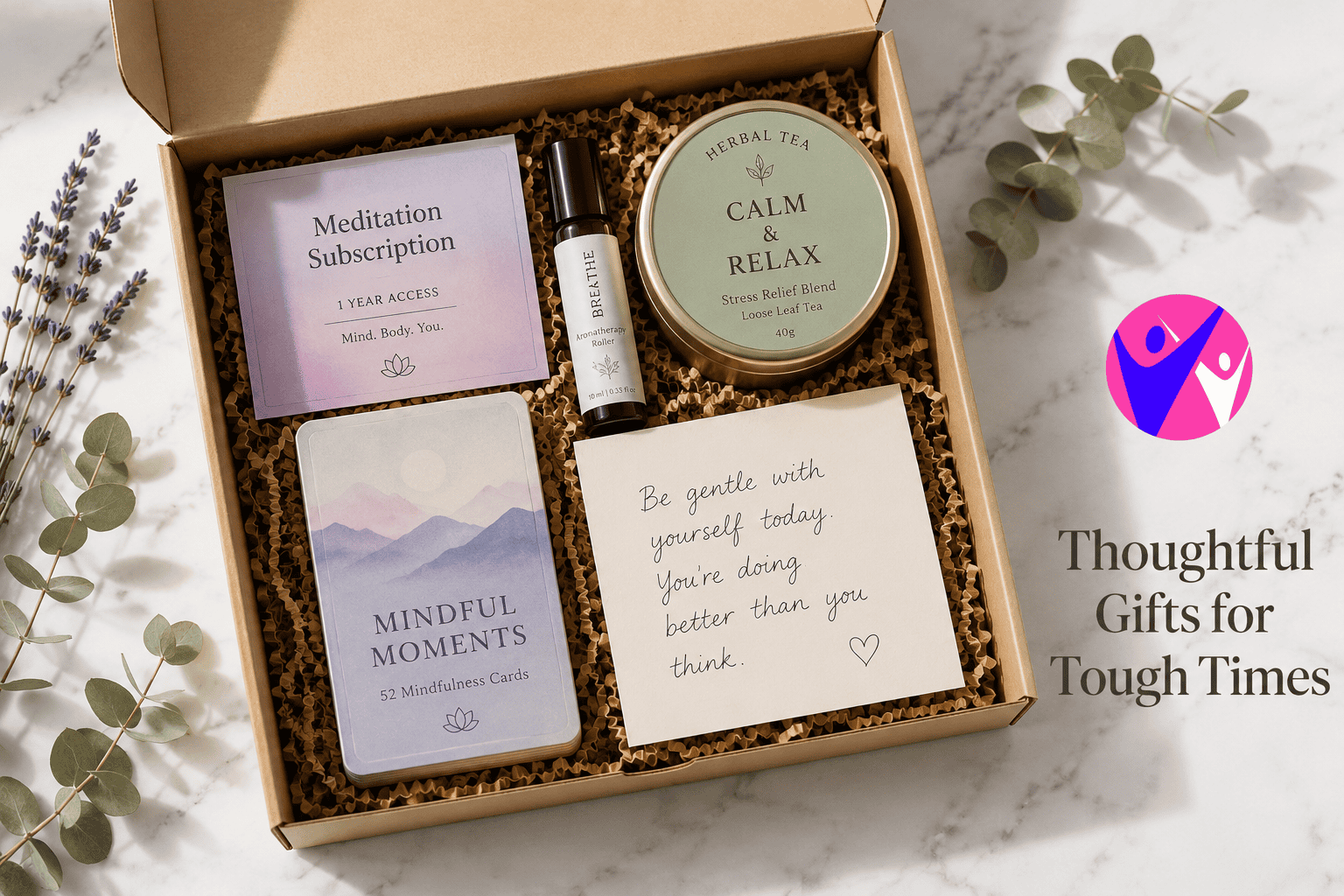
Candles and bath bombs are the default — and they’re often the least used. In 2026, the most thoughtful self-care gifts go beyond bathroom aesthetics and into daily habit support.
Alternatives that stand out:
- Acupressure mat and pillow set: Passive tension release used lying down
- Mindfulness card deck (e.g., The School of Life): Daily prompts that take 2 minutes
- Herbal adaptogen kit: Ashwagandha, rhodiola, and magnesium supplements in a curated set
- Binaural beats playlist or app: Audio-based stress relief backed by neuroscience research
- Pulsetto vagus nerve stimulator: Wearable device for on-demand nervous system calm [8]
- Sunrise alarm clock: Replaces jarring wake-ups with a gradual light cycle
- Meal planning subscription: Removes daily decision fatigue
The 2026 gifting trend report highlights a clear shift toward mindful, emotionally valuable gifts over decorative ones [5]. Buyers who move away from the candle-and-bath-bomb default consistently report more positive recipient feedback.
Where Can You Find Unique Self-Care Gifts Under $50?
Finding quality stress relief gifts under $50 is straightforward when you know where to look. The key is avoiding mass-market “wellness” sections that bundle low-quality items together.
Best sources for unique under-$50 finds:
- Etsy: Handmade journals, custom affirmation card sets, artisan herbal teas
- Amazon Handmade: Curated small-batch wellness products
- Local wellness boutiques: Unique finds that support small businesses
- Subscription box trial months: Many services offer one-month trials under $40
- App stores: Annual meditation or sleep app subscriptions often run $30–$50
Specific picks under $50:
- Mindfulness journal with prompts: $15–$25
- Herbal tea stress sampler: $20–$35
- Acupressure ring set: $10–$20
- Foam roller: $20–$35
- Meditation app 3-month gift card: $30–$45
Do Men and Women Want Different Types of Stress Relief Gifts?
Gender preferences in stress relief gifts exist but are less binary than most gift guides suggest. The more useful frame is stress type and lifestyle, not gender.
That said, some patterns hold in 2026:
Patterns among men:
- Tend to prefer active recovery tools (massage guns, foam rollers, cold plunge accessories)
- More receptive to tech-based solutions (biofeedback devices, sleep trackers)
- Often respond well to experience gifts (sports massage, fitness class, cooking class)
Patterns among women:
- More likely to use journaling, aromatherapy, and skincare-integrated self-care
- Higher uptake on meditation apps and wellness subscriptions
- The “morning shed” skincare routine trend has seen an 815% interest increase in 2026, indicating strong engagement with daily ritual-based self-care [7]
The real rule: Ask or observe. A man dealing with workplace stress may want a noise-canceling headset more than a massage gun. A woman who hates journaling won’t use a $40 planner.
Self-Care Gifts for Someone Going Through a Tough Time
When someone is in the middle of grief, a health crisis, a job loss, or a major life transition, the best gifts reduce friction and signal genuine care. Avoid anything that requires effort, learning, or sustained commitment to use.
What works:
- Meal delivery subscription (one month): Removes the burden of feeding themselves
- Comfort item (weighted blanket, soft throw, quality slippers): Immediate physical comfort
- Handwritten note with a low-key offer: “I’m bringing dinner Tuesday — no need to reply”
- Audiobook or podcast subscription: Passive, requires no energy
- Journal with a single prompt written inside: Lowers the barrier to starting
What to avoid:
- Anything that implies they need to “get better” or “work on themselves”
- Complex tools that require setup or learning
- Gifts that expire quickly if unused
For someone navigating emotional overload, pairing a comfort gift with a link to how to release emotional stress can be a quiet, helpful gesture — not pushy, just available.
Are Subscription Boxes Worth It for Stress Relief?
Subscription boxes are worth it when they’re curated for the recipient’s actual habits and delivered at a pace they can absorb. They’re not worth it when they become clutter or obligation.
When subscription boxes work well:
- The recipient already has a self-care routine and wants variety
- The box focuses on consumables (teas, supplements, skincare) rather than accumulating objects
- It’s gifted as a 1–3 month trial, not an open-ended commitment
Top categories for stress relief subscriptions in 2026:
- Meditation app memberships (Calm, Headspace, Waking Up)
- Herbal wellness boxes (adaptogens, teas, supplements)
- Mindfulness and journaling boxes (The Mindfulness Box, Therabox)
- Fitness and recovery boxes (foam rollers, resistance bands, recovery tools)
The growth in subscription-based self-care services reflects a broader shift toward ongoing wellness support rather than one-time gifts [1]. For structured community-based options, preventative ritual memberships offer a compelling alternative to standard subscription boxes.
Decision rule: Choose a subscription if the person already uses that category of product. Skip it if they’re overwhelmed or minimalist.
What Self-Care Gifts Are Good for People With Chronic Stress?

Chronic stress requires tools built for daily use, not occasional relief. The best gifts for this group are durable, low-effort to maintain, and address the physiological roots of sustained stress.
Top picks for chronic stress:
- Weighted blanket: Consistent nightly use builds cumulative benefit [3]
- Magnesium supplement kit: Magnesium glycinate is widely used for nervous system support and sleep
- Biofeedback or HRV tracker (e.g., Whoop, Oura Ring): Helps the person understand their stress patterns objectively
- Vagus nerve stimulator: Designed for repeated use, not one-time relief [8]
- Journaling habit kit: Consistent expressive writing reduces cortisol over time
- Annual meditation app subscription: Daily practice compounds over months
People with chronic stress often benefit from understanding the connection between stress and physical symptoms. The article on how stress can reduce appetite is a useful companion resource for anyone trying to understand their body’s stress response.
For chronic stress rooted in workplace pressure, the AI anxiety in the workplace guide covers a growing and often underaddressed stress source in 2026.
Frequently Asked Questions
Q: What’s the single best self-care gift for stress relief in 2026? A weighted blanket is the most consistently effective physical gift for stress and anxiety, backed by evidence on deep pressure stimulation and priced accessibly at $50–$150 [3]. For ongoing support, a meditation app annual subscription comes in close second.
Q: Are self-care gifts appropriate for men? Yes. Men respond well to active recovery tools (massage guns, foam rollers), tech-based stress relief (HRV trackers, vagus nerve devices), and experience gifts. The key is matching the gift to how they manage stress, not defaulting to gender stereotypes.
Q: What self-care gift works best for work-related stress? Noise-canceling headphones, a guided meditation app, or a massage tool for desk use all target the physical and cognitive symptoms of work stress directly. A journaling kit with work-specific prompts is also effective for people who process stress through writing.
Q: Can a self-care gift actually help with anxiety, or is it just symbolic? Some gifts — weighted blankets, vagus nerve stimulators, and meditation apps — have genuine physiological effects on the nervous system. Others are more symbolic but still valuable for signaling care. The most effective gifts combine both: they work and they communicate that someone cares.
Q: What should I avoid when buying a stress relief gift? Avoid generic spa sets with low-quality items, anything that requires significant effort to use, and gifts that imply the recipient is broken or needs fixing. Also skip anything with a short shelf life if the person is already overwhelmed.
Q: Is it better to give a physical gift or an experience for stress relief? In 2026, experiences consistently outperform physical items in recipient satisfaction — 92% of Americans prefer experiences over objects [1]. A spa day, fitness class pass, or wellness retreat often has more lasting impact than a product.
Q: What’s a good last-minute self-care gift under $25? A mindfulness card deck, herbal stress tea sampler, or a digital gift card for a meditation app can all be sourced quickly and used immediately. A handwritten note with a specific offer of help (a meal, a walk, a phone call) costs nothing and often means the most.
Q: Are corporate wellness gifts worth it for employee stress? Yes, when they’re personalized and practical. Companies investing in mental health toolkits and sustainable wellness items report stronger employee engagement [2]. Generic branded mugs and stress balls are the corporate equivalent of bath bombs — well-intentioned but rarely used.
Conclusion: Give Gifts That Actually Build Resilience
The best self-care gifts in 2026 do more than signal care — they give someone a tool they’ll reach for on a hard day. That’s the standard worth holding.
Three actionable steps before you buy:
- Identify the stress type. Is it work pressure, emotional overload, sleep deprivation, or chronic tension? Match the gift to the root cause, not the symptom.
- Match the format to the person. An introvert needs solo recovery tools. Someone in burnout needs low-effort options. Someone with anxiety benefits from tactile comfort or nervous system support.
- Choose for daily use, not the unboxing moment. The best stress relief gift is the one that gets used on a Wednesday, not just the day it’s received.
Self-care isn’t a luxury — it’s a recovery strategy. A well-chosen gift can be the nudge someone needs to actually start one.
References
[1] Experiential Self Care Gifts Poised For 2026 Boom Wellness Local Subscriptions – https://www.prismnews.com/gifting/self-care-gifts/experiential-self-care-gifts-poised-for-2026-boom-wellness-local-subscriptions?utm_source=openai
[2] Self Care Swag Corporate Gifting In 2026 – https://www.brandables.com/blog/self-care-swag-corporate-gifting-in-2026/?utm_source=openai
[3] Wellness Gifts Guide 2026 – https://heartwarmers.com/wellness-gifts-guide-2026/?utm_source=openai
[4] Why Tactile Comfort Products Are Growing In 2026 – https://www.suebangroup.com/why-tactile-comfort-products-are-growing-in-2026/?utm_source=openai
[5] 2026 Global Gifting Trends Mindfulness And Self Care Boom – https://www.shaolinmart.com/blogs/hot/2026-global-gifting-trends-mindfulness-and-self-care-boom?utm_source=openai
[7] The Spa Trends Report 2026 – https://www.spaseekers.com/spa-insider/inspiration/the-spa-trends-report-2026/?utm_source=openai
[8] Stress Relief Gifts – https://pulsetto.tech/blogs/blog/stress-relief-gifts?utm_source=openai