
}

Last updated: May 31, 2026
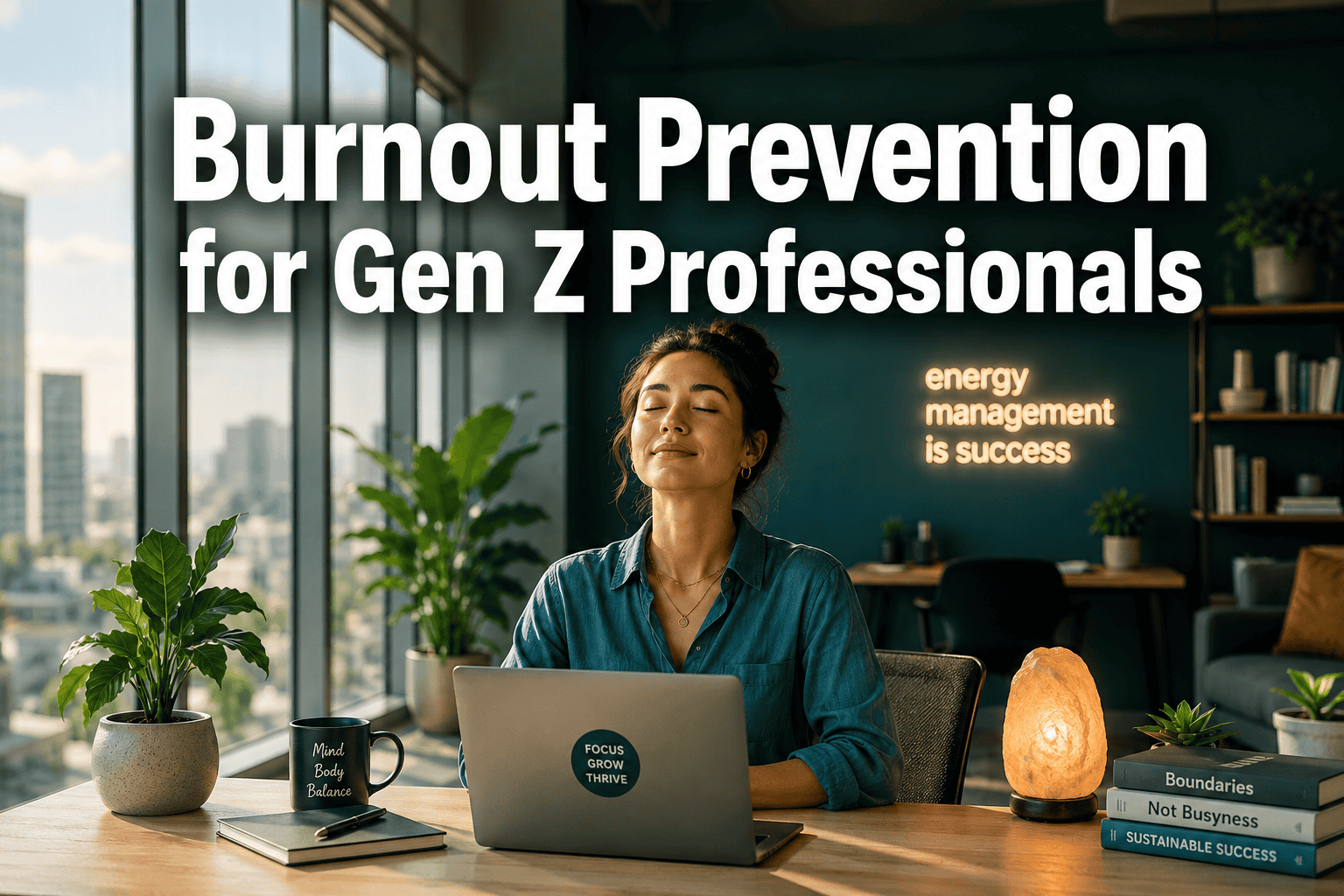
Quick Answer: Burnout among Gen Z professionals is real, widespread, and preventable. A 2026 Zety survey found that 71% of Gen Z workers report experiencing burnout, with overwork and poor management as the top causes [1]. The most effective approach combines early warning recognition, daily boundary-setting, and practical techniques for dealing with stress — many of which cost nothing and take under five minutes.
Key Takeaways
- 71% of Gen Z workers report burnout in 2026, making prevention a career-critical skill, not a luxury [1]
- Burnout can happen even in jobs you love — passion does not protect you from exhaustion
- Social media comparison and blurred work-life boundaries are major Gen Z-specific stress drivers [3]
- Many effective stress management techniques require zero budget and can be done at your desk
- Setting boundaries early in your career is a professional strength, not a weakness
- Remote work can intensify burnout if digital boundaries are not actively maintained
- Most entry-level health insurance plans cover at least some mental health support — check before assuming you can’t afford help
- Quitting is rarely the first answer; structural changes and boundary-setting often resolve the core problem
- Building a sustainable career requires treating recovery as a non-negotiable, not a reward
What Exactly Is Burnout and How Do You Know If You’re Experiencing It
Burnout is a state of chronic physical and emotional exhaustion caused by prolonged, unmanaged stress — most often from work. The World Health Organization classifies it as an occupational phenomenon with three core dimensions: exhaustion, mental distance from your job, and reduced professional effectiveness.
Knowing the difference between a rough week and actual burnout matters, because the response is different.
Signs you may be heading toward burnout:
- Dreading work even after a full weekend of rest
- Feeling detached or cynical about tasks you used to care about
- Struggling to concentrate on simple decisions
- Physical symptoms: frequent headaches, disrupted sleep, getting sick more often
- Emotional numbness or irritability with colleagues and friends
- A sense that nothing you do is ever enough
“Burnout doesn’t arrive all at once. It builds quietly, disguised as dedication.”
If four or more of these signs are consistent over two or more weeks, that’s a strong signal — not just stress, but a pattern worth addressing now. For a deeper look at what quiet burnout actually feels like, read this guide on quiet burnout recovery.

How Is Workplace Stress Different for Gen Z Compared to Other Generations
Gen Z professionals face a distinct combination of pressures that older generations did not encounter at the same career stage. Understanding this difference is the first step toward choosing the right techniques for dealing with stress.
Three factors make Gen Z burnout unique:
1. Social media comparison pressure. Constant exposure to curated portrayals of peers’ achievements on platforms like LinkedIn and Instagram fuels feelings of inadequacy that older workers simply didn’t face in their 20s [3].
2. Generational workplace tension. A 2024 Oak Engage study found that 26% of Gen Z employees feel that Millennials normalize working long hours, creating implicit pressure to match that pace [2]. Meanwhile, 22% of Millennials describe Gen Z as “entitled” for wanting boundaries — a tension that makes advocating for yourself feel risky [2].
3. AI-driven job anxiety. Research published in 2025 found that generative AI adoption increases job demands and heightens burnout risk, particularly for knowledge workers and developers [4]. If you’re already managing AI anxiety in the workplace, that’s a real and documented stressor — not a personal failing.
Signs That You’re Heading Toward Total Professional Burnout
Burnout follows a predictable pattern. Catching it in the middle stages gives you time to course-correct without major disruption to your career or health.
| Stage | What It Looks Like |
|---|---|
| Early | Mild fatigue, occasional irritability, harder to “switch off” after work |
| Middle | Chronic exhaustion, cynicism, reduced output, social withdrawal |
| Late | Emotional numbness, inability to function professionally, physical illness |
Most Gen Z professionals hit the middle stage before they recognize what’s happening. The key early warning: when rest stops being restorative. If a full night’s sleep or a weekend away doesn’t recharge you, burnout is already building.
Why You Feel Burned Out Even Though You Love Your Job
Loving your job does not make you immune to burnout — in fact, passion can accelerate it. When work feels meaningful, it’s easier to justify skipping breaks, working late, and absorbing stress without complaint.
Psychologists call this “overcommitment.” The same drive that makes you good at your job also makes you less likely to set limits. Add in the fact that 63% of Gen Z workers view their current roles as stepping stones [1] — meaning they’re pushing hard now to get somewhere better later — and the pressure compounds fast.
The fix isn’t to care less. It’s to build systems that protect your energy so you can keep caring long-term. Think of it as sustainable fuel, not a sprint. Explore how stress can actually fuel your growth when it’s channeled correctly — the key word being channeled, not absorbed without limit.
Techniques for Dealing with Stress You Can Use Right at Your Desk
The best stress management techniques are the ones you’ll actually use. These require no equipment, no app subscription, and no privacy.

Five desk-based techniques that work:
Box breathing (4-4-4-4). Inhale for 4 counts, hold for 4, exhale for 4, hold for 4. Repeat three times. This activates your parasympathetic nervous system within 90 seconds. See the full breakdown of deep breathing and grounding techniques for step-by-step guidance.
The 5-4-3-2-1 grounding method. Name 5 things you can see, 4 you can touch, 3 you can hear, 2 you can smell, 1 you can taste. Interrupts anxiety spirals fast.
Micro-movement breaks. Stand up, roll your shoulders, walk to get water. Even 90 seconds of movement shifts your cortisol response. Snack-sized workouts for stress are built exactly for this.
Phone face-down rule. For focused work blocks, flip your phone over and silence non-urgent notifications. Constant pings keep your nervous system in low-grade alert mode all day.
Two-minute brain dump. When overwhelmed, open a notes app and write every task, worry, or thought in your head. Getting it out of your mind and onto a screen reduces cognitive load immediately.
For a broader toolkit, the tools for managing work stress resource covers both digital and analog options worth bookmarking.
Cheapest Ways to Manage Stress Without Expensive Therapy
Effective stress management does not require a $200/month therapy subscription. Most of the highest-impact techniques for dealing with stress are free or very low cost.
Free options:
- YouTube guided meditations (search “NSDR” or “non-sleep deep rest” for 10–20 minute sessions)
- Walking outside for 20 minutes — sunlight and movement together reduce cortisol more effectively than either alone
- Journaling: three things that went well today, one thing to let go of
- Community support through employer ERGs (Employee Resource Groups) — check if yours has a mental wellness group
Low-cost options (under $15/month):
- Insight Timer (free tier is genuinely robust)
- Calm or Headspace (often discounted through employer wellness programs — check your benefits portal)
- Library card access to apps like Libby for audiobooks on stress and resilience
Best meditation apps for people who can’t sit still: Skip the 20-minute silent sessions. Instead, try:
- Insight Timer for short, guided body scans (5–7 minutes)
- Waking Up for intellectually engaging, non-spiritual meditation
- YouTube’s “walking meditation” videos — movement plus mindfulness, no stillness required
Is Remote Work Making Stress Worse for Young Professionals
For many Gen Z professionals, yes — but the cause is specific and fixable. Research published in 2025 found that blurred boundaries between work and personal life, especially in remote roles, directly increase burnout and reduce well-being [3].
The problem isn’t remote work itself. It’s the absence of natural transition rituals — no commute, no physical separation between “work space” and “home space,” and the expectation of constant digital availability.
What actually helps:
- Create a hard stop time and stick to it — set a recurring calendar block called “End of Work Day” at 5:30 PM or whenever your boundary is
- Use a different browser profile for work versus personal use
- Build a shutdown ritual: close all tabs, write tomorrow’s top three tasks, physically close your laptop
- Separate your work and personal Slack/email notifications by device or time window
If remote isolation is affecting your mood and social connection, building social connections as a deliberate practice — not just a byproduct of being in an office — becomes a core part of your mental health strategy.
How Successful Gen Z Professionals Prevent Burnout
The Gen Z professionals who sustain high performance without burning out share a few consistent habits. None of them are about working less — they’re about working with structure.

What they do differently:
- They treat boundaries as professional standards, not personal preferences. “I don’t check email after 7 PM” is stated as a fact, not an apology.
- They build recovery into their schedule before they need it. One full non-work day per week, protected.
- They normalize asking for clarity. Ambiguous expectations are a top burnout driver — high performers ask “what does success look like here?” upfront.
- They track their energy, not just their time. They notice which tasks drain them and which restore them, and they sequence their day accordingly.
- They invest in mental fitness training as a regular practice, the same way they’d go to the gym.
Experts also emphasize that employers play a critical role — flexible workloads, normalized time off, and supportive management are structural factors that individual effort can’t fully replace [6].
Mental Health Resources Covered by Entry-Level Health Insurance
Most entry-level employer health plans in the US are required to cover mental health services at the same level as physical health services under the Mental Health Parity and Addiction Equity Act. That means therapy is often more accessible than you think.
What to check in your benefits portal:
- EAP (Employee Assistance Program): Most employers offer 3–8 free therapy sessions per year through an EAP — separate from your insurance deductible. Many employees never use this.
- In-network therapists: Use your insurer’s provider directory and filter for “in-network” to find therapists covered at your plan’s standard copay (often $20–$50/session).
- Telehealth therapy: Platforms like Teladoc, MDLive, or your insurer’s own telehealth service often offer same-week mental health appointments at low or no cost.
- Community mental health centers: Sliding-scale fees based on income — often $0–$30/session for qualifying individuals.
Common mistake: Assuming therapy is unaffordable before checking your actual benefits. Log into your benefits portal and search “behavioral health” or “mental health” before ruling it out.
Common Mistakes Young Workers Make That Lead to Burnout
Burnout rarely comes from one bad decision. It builds from repeated small choices that seem reasonable in isolation.
The most common patterns:
- Saying yes to everything early in their career to prove themselves, with no exit strategy from the overload
- Treating exhaustion as a badge of honor — “I’m so busy” becomes an identity, not a warning sign
- Skipping vacations or not fully disconnecting during time off (checking email “just once” defeats the purpose)
- Ignoring physical signals — poor sleep, frequent illness, and appetite changes are the body’s early alerts [see also: how stress can reduce appetite]
- Waiting for their manager to notice instead of advocating for workload adjustments themselves
The fix for most of these is the same: build the habit of regular self-assessment. Once a week, ask: “Is my current pace sustainable for the next six months?” If the honest answer is no, that’s your signal to adjust now — not later.
When Should You Quit Your Job Because of Stress
Quitting is rarely the first answer, but it is sometimes the right one. The key is distinguishing between a fixable situation and a structurally harmful one.
Consider leaving if:
- Your manager or organization has been informed of the problem and nothing has changed after a reasonable period (60–90 days)
- The stress is causing documented physical health consequences
- The workplace culture actively punishes boundary-setting or mental health conversations
- You’ve used available resources (EAP, HR, manager conversations) without improvement
Try these first:
- A direct conversation with your manager about workload or expectations
- A formal request for a role adjustment, project reassignment, or schedule change
- A mental health reset period using accrued PTO before making a permanent decision
Remember: 63% of Gen Z workers already view their jobs as stepping stones [1]. If a role isn’t serving your growth and is actively harming your health, moving on is a strategic decision — not a failure.
Alternative Career Paths If Your Current Job Is Destroying Your Mental Health
If structural changes haven’t helped and the role itself is the problem, exploring alternatives is a practical next step — not an overreaction.
Options worth considering:
- Lateral moves within your company: A different team, manager, or project scope can change everything without requiring you to restart your career
- Freelance or contract work: Offers more schedule control, though with less income stability — worth modeling financially before committing
- Roles in mission-driven organizations: If meaning is what’s missing, a sector shift (nonprofit, social enterprise, B-corp) may address the root cause
- Smaller companies or startups: Often have less bureaucracy and more direct impact visibility, which reduces the “invisible treadmill” feeling common in large corporations
Before making any major move, get clear on what specifically is causing the burnout — the industry, the company culture, the role type, or the management style. Changing the wrong variable just restarts the cycle.
Frequently Asked Questions
Q: How long does it take to recover from burnout? Recovery depends on severity. Mild burnout may resolve in two to four weeks with consistent boundary-setting and rest. Moderate to severe burnout can take three to six months or longer, especially without professional support.
Q: Can burnout cause physical health problems? Yes. Chronic stress and burnout are linked to suppressed immune function, cardiovascular strain, disrupted sleep, and digestive issues. Physical symptoms are often the first measurable sign that stress has crossed into burnout territory.
Q: Is it normal to feel burned out after only six months at a job? Yes, and it’s more common than most people admit. Onboarding pressure, proving yourself, and learning a new environment all create concentrated stress. Early burnout is a signal to build recovery habits now, not a sign you chose the wrong career.
Q: What’s the difference between stress and burnout? Stress is typically acute — it spikes and then resolves. Burnout is chronic exhaustion that doesn’t lift with normal rest. The clearest test: if a full weekend of rest doesn’t make you feel meaningfully better, you’re likely dealing with burnout, not just stress.
Q: Should I tell my manager I’m burned out? It depends on your manager and workplace culture. If your manager is supportive, a direct conversation about workload is often the fastest path to relief. If not, start with HR or your EAP. Frame it around workload and performance sustainability, not emotional state, if you’re unsure how it will be received.
Q: Do meditation apps actually work for stress? Research supports mindfulness-based practices for stress reduction, but apps work best as entry points, not replacements for deeper intervention. Five minutes of guided breathing daily is genuinely useful — but if burnout is severe, apps alone won’t be enough.
Q: How do I set work boundaries without looking lazy? Frame boundaries around output, not hours. “I deliver my best work when I protect focused time blocks” is harder to argue with than “I don’t work after 6 PM.” Consistent, high-quality output is the strongest argument for sustainable work habits.
Q: What if my whole team is burned out? This is a systemic problem, not an individual one. Document the pattern and bring it to management with specific, solution-focused language: “Our team’s output has declined and three people have mentioned exhaustion — can we review current workloads together?” Collective advocacy is more effective than individual complaints.
Conclusion
Burnout is not a character flaw or a sign of weakness — it’s a predictable outcome of sustained pressure without adequate recovery. For Gen Z professionals navigating demanding workplaces in 2026, the stakes are high: 71% of your peers are already feeling it [1], and the pressure isn’t going away on its own.
The good news is that the most effective techniques for dealing with stress are accessible, practical, and buildable into your existing routine. You don’t need a wellness retreat or an expensive coach. You need consistent small actions: a hard stop time, a breathing technique at your desk, a weekly self-check, and the willingness to ask for what you need before you’re running on empty.
Your next steps:
- This week: Identify your top two burnout warning signs and write them down. Awareness is the foundation of prevention.
- This month: Set one non-negotiable boundary — a specific time, day, or task type — and hold it for 30 days.
- Right now: Log into your benefits portal and find out what mental health support you already have access to. Most people are surprised by what’s there.
Building a sustainable career is a long game. Protecting your energy now is what keeps you in it.
References
[1] cpapracticeadvisor – https://www.cpapracticeadvisor.com/2026/04/09/63-of-gen-z-workers-say-their-job-is-just-a-stepping-stone-71-report-burnout/181193/?utm_source=openai
[2] New Survey Reveals Half Of Gen Z And Millennial Employees Report Burnout – https://www.oak.com/newsroom/new-survey-reveals-half-of-gen-z-and-millennial-employees-report-burnout/?utm_source=openai
[3] 3 Reasons Why Gen Z Is Burning Out Fast By A Psychologist – https://www.forbes.com/sites/traversmark/2025/03/31/3-reasons-why-gen-z-is-burning-out-fast—by-a-psychologist/?utm_source=openai
[4] arxiv – https://arxiv.org/abs/2510.07435?utm_source=openai
[5] Preventing Burnout In Millennial And Gen Z Leaders – https://www.linkedin.com/top-content/soft-skills-emotional-intelligence/burnout-prevention-tips/preventing-burnout-in-millennial-and-gen-z-leaders/?utm_source=openai
[6] How Gen Z Can Avoid Burnout – https://www.icaew.com/insights/viewpoints-on-the-news/2025/mar-2025/how-gen-z-can-avoid-burnout?utm_source=openai