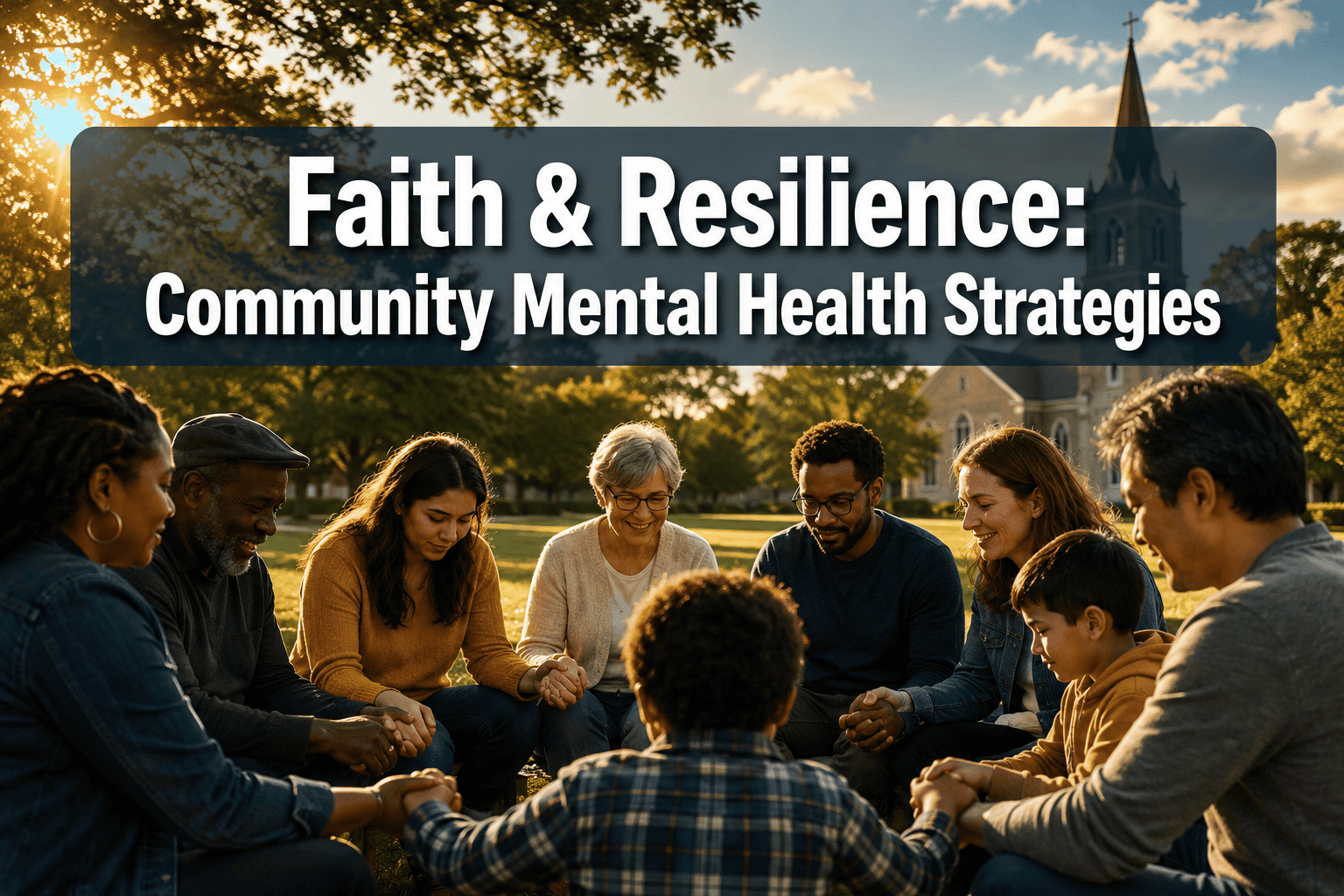

Last updated: May 29, 2026
Quick Answer: Faith resilience refers to the capacity to recover from stress, trauma, and burnout by drawing on spiritual beliefs, community support, and religious practices. Research consistently links active participation in faith communities to lower rates of depression, anxiety, and social isolation. For people navigating burnout or life disruption, faith-based mental health strategies offer a structured, community-grounded path toward emotional recovery.
Key Takeaways
- Faith resilience combines spiritual belief, community connection, and practical coping skills to buffer against stress and mental health decline.
- Active participation in a faith community reduces social isolation, one of the strongest predictors of poor mental health outcomes.
- Programs like NAMI FaithNet, SAMHSA’s Faith Engagement Initiative, and the Mental Health Grace Alliance offer structured, accessible support. [1][2][3]
- Faith-based mental health strategies can benefit people across a wide spectrum of religiosity, including those who identify as “spiritual but not religious.”
- Trauma survivors can access specialized faith-integrated programs that combine biblical frameworks with evidence-based therapeutic techniques.
- Cultural context matters significantly: effective faith-based support respects the specific traditions, languages, and historical experiences of each community.
- Common mistakes include treating faith as a replacement for professional care, or dismissing mental health struggles as a lack of faith.
- Faith counseling costs range from free (peer-led church groups) to $80–$150/session for licensed faith-integrated therapists, depending on the provider.
- If traditional religious approaches don’t resonate, secular community-based models offer similar social and structural benefits.

What Exactly Is Faith Resilience and How Does It Help Mental Health?
Faith resilience is the ability to withstand and recover from adversity by drawing on spiritual beliefs, religious community, and a sense of divine purpose. It’s not passive acceptance of hardship — it’s an active process of finding meaning, accessing support, and rebuilding after stress or loss.
Here’s how it works in practice:
- Meaning-making: Religious frameworks give suffering context. When people believe their struggles have purpose, they’re more likely to persist through difficulty rather than collapse under it.
- Community accountability: Regular attendance at worship services, small groups, or prayer circles creates built-in social check-ins that reduce isolation.
- Structured routine: Prayer, scripture reading, and worship services provide daily and weekly rhythms that stabilize mood and reduce anxiety.
- Forgiveness practices: Christian traditions specifically emphasize forgiveness — of self and others — which research links to reduced hostility and lower cortisol levels (Harvard T.H. Chan School of Public Health, 2016).
- Hope orientation: Faith traditions emphasize future hope, which directly counters the hopelessness that drives depression.
For working adults dealing with burnout, faith resilience offers something clinical approaches sometimes miss: a ready-made community that meets weekly, costs nothing to join, and provides both emotional and practical support. For more on building that kind of support network, see this guide on building social connections.
How Do Different Religious Communities Build Emotional Strength?
Faith communities build emotional strength through shared ritual, mutual accountability, and organized care structures. Christian communities in particular have developed a range of formal and informal support systems that go well beyond Sunday services.
Common structures across faith traditions:
| Structure | What It Does | Example |
|---|---|---|
| Small groups / cell groups | Weekly peer support, prayer, accountability | Home Bible study circles |
| Pastoral counseling | One-on-one spiritual guidance | Church-based counseling offices |
| Deacon/elder care teams | Practical help during crisis (meals, childcare) | Hospital visitation ministries |
| Recovery ministries | Addiction and trauma-specific support | Celebrate Recovery programs |
| Mental health first aid training | Equip lay members to recognize crisis signs | Anchor International programs [5] |
BMH Village, for example, partners directly with Black churches to reduce mental health stigma, train pastors in mental health first aid, and improve access to therapy for congregants — addressing both cultural and structural barriers simultaneously. [7]
Common mistake: Many churches focus exclusively on spiritual care while avoiding clinical referrals. Effective communities do both — they offer spiritual support AND connect members to licensed professionals when needed.
Can Faith Resilience Work for People Who Aren’t Very Religious?
Yes. The core mechanisms behind faith resilience — community belonging, structured routine, shared values, and purpose — are accessible even to people with low religious commitment or no formal belief system.
Research on social connectedness consistently shows that the community element of faith participation drives many of the mental health benefits, independent of theological belief. Someone who attends a faith community primarily for the social connection and structured support still gains meaningful protection against isolation and burnout.
If you’re low on religious commitment but want the benefits:
- Join a faith community’s service or volunteer arm without committing to doctrinal belief.
- Attend open support groups hosted by faith organizations (many are open to all).
- Explore “spiritual but not religious” frameworks that use prayer, meditation, or gratitude practices without formal theology.
- Consider programs like NAMI FaithNet, which welcomes people across the full spectrum of religious identity. [2]
The key question isn’t “How religious am I?” but rather “What structure, community, and meaning framework can I actually sustain?” Start there.

What Are the Most Effective Faith-Based Mental Health Support Programs?
Several well-structured programs stand out for their reach, evidence base, and practical accessibility in 2026.
Top programs to know:
NAMI FaithNet — The National Alliance on Mental Illness’s interfaith network provides resources, training, and community support for faith leaders and congregants navigating mental health challenges. Free to access. [2]
SAMHSA’s Faith and Community Engagement Initiative — Offers training for faith leaders to recognize mental health warning signs, facilitate early intervention, and connect individuals to care. Federally funded, free resources. [1]
Mental Health Grace Alliance — A Christian-specific program that blends biblical teaching with science-based mental health care. Has reached over 30,000 individuals across 58 countries. Free curriculum available for churches. [3]
TruePresence (with Divine Mercy University) — Integrates Catholic tradition with evidence-based psychology. Serves professionals, parishes, and organizations with structured wellness programs. [4]
Anchor International — Equips churches with peer-led support group programs and mental health awareness training for a Christ-centered community model. [5]
Grace & Grit (Legacies Empowered) — Trauma-informed training for faith communities covering mental health literacy, opioid awareness, and suicide prevention. [6]
Choose a program based on:
- Your denomination or tradition (some are explicitly Christian; others are interfaith)
- Whether you need individual support or want to equip your congregation
- Budget (most are free or low-cost; TruePresence has subscription tiers for organizations)
How Much Does Faith Counseling or Spiritual Therapy Typically Cost?
Cost varies significantly depending on the type of support and provider. Here’s a realistic breakdown for 2026:
| Support Type | Typical Cost | Notes |
|---|---|---|
| Church peer support groups | Free | Most common entry point |
| Pastoral counseling | Free – $50/session | Offered by many churches; quality varies |
| Faith-integrated licensed therapist | $80 – $150/session | Licensed professionals with spiritual training |
| Online faith-based platforms | $40 – $80/session | Growing availability via telehealth |
| Structured church programs (e.g., Mental Health Grace Alliance) | Free | Curriculum-based, volunteer-led [3] |
| Organizational wellness programs (e.g., TruePresence) | Subscription-based | Priced for parishes/employers [4] |
Practical note: Many licensed faith-integrated therapists accept insurance. If cost is a barrier, start with free church-based programs and use them as a bridge to professional care when needed. Sliding-scale fees are common in faith-adjacent nonprofit counseling centers.
What Are Common Mistakes People Make When Using Faith for Healing?
The biggest mistake is treating faith as a substitute for professional mental health care rather than a complement to it. This can delay treatment for serious conditions like clinical depression, PTSD, or anxiety disorders.
Other frequent mistakes:
- Spiritualizing symptoms: Telling someone their depression is “just a spiritual battle” dismisses the biological and psychological dimensions of mental illness.
- Shame-based framing: Implying that mental health struggles reflect weak faith damages trust and drives people away from both faith communities and professional help.
- Isolation as “prayer time”: Withdrawing from community under the guise of spiritual practice can deepen depression rather than relieve it.
- Avoiding medication: Some faith traditions discourage psychiatric medication. This can be genuinely harmful for conditions that respond well to pharmacological treatment.
- One-size-fits-all support: Applying the same scripture or prayer approach to everyone, regardless of their specific mental health need or cultural background.
If you’re supporting someone in your faith community, pair spiritual care with practical resources. Programs like Grace & Grit specifically train faith leaders to avoid these pitfalls through trauma-informed education. [6] For more on recognizing when stress becomes something more serious, see when your brain plays tricks on you.
Who Benefits Most From Faith Resilience Approaches?
Faith resilience strategies work best for people who already have some connection to a faith tradition or are open to exploring one. But specific populations show particularly strong outcomes.
High-benefit groups:
- Adults recovering from grief or loss — Faith frameworks for mourning and afterlife belief provide structured meaning during bereavement.
- People in addiction recovery — Programs like Celebrate Recovery integrate the 12-step model with Christian principles, offering community and accountability.
- Caregivers and ministry workers — Burnout is high in these groups; faith communities can provide reciprocal care that clinical settings don’t.
- Older adults — Religious participation is one of the strongest protective factors against late-life depression and cognitive decline.
- Communities of color — For many Black, Latino, and immigrant communities, the church is the primary mental health touchpoint and the most trusted institution. BMH Village’s work with Black churches reflects this reality directly. [7]
Who may benefit less: People with religious trauma, those who’ve experienced abuse within faith communities, or individuals whose mental health condition requires intensive clinical intervention first.
Are There Faith Resilience Strategies That Work for Trauma Survivors?
Yes, and this is one of the most important applications of faith resilience work. Trauma survivors need approaches that are explicitly trauma-informed — meaning they prioritize safety, choice, and non-retraumatization.
Effective trauma-focused faith strategies include:
- Lament practices: Many Christian traditions include structured lament (honest, grief-filled prayer) that validates suffering rather than bypassing it.
- Narrative reframing: Working with a trained pastoral counselor to reconstruct a personal story that includes trauma without being defined by it.
- Body-based spiritual practices: Slow, grounding practices like contemplative prayer align well with nervous system regulation. See also: deep breathing and grounding techniques.
- Peer support groups: Anchor International’s Christ-centered support groups create structured, safe spaces for trauma disclosure within a faith context. [5]
- Grace & Grit training: This program specifically equips faith communities with trauma-informed skills, including suicide prevention and crisis response. [6]
Critical rule: Trauma survivors should never be pressured to forgive prematurely, share publicly before they’re ready, or interpret their trauma as divine punishment. Trauma-informed faith care requires trained facilitators, not just good intentions.

How Do Cultural Differences Impact Faith-Based Mental Health Support?
Cultural context shapes everything — which mental health topics are discussable, which helpers are trusted, and which interventions feel respectful versus invasive. Effective faith resilience programs account for this from the start.
Key cultural dynamics to understand:
- Black church traditions: The church has historically been the primary community institution for Black Americans. Mental health stigma remains a barrier, but programs like BMH Village are making direct inroads by working within existing church structures rather than imposing external models. [7]
- Latino Catholic communities: Family (familismo) and faith are deeply intertwined. Effective support respects family involvement and uses Spanish-language resources.
- Asian Christian communities: Stigma around mental illness is often high; indirect, community-based approaches tend to work better than individual therapy framing.
- Immigrant faith communities: Trauma from displacement, language barriers, and distrust of institutions require culturally humble outreach.
Practical implication: A program that works well in a suburban white evangelical church may land poorly in a historically Black congregation or an immigrant Catholic parish. Effective programs train facilitators in cultural humility, not just mental health content.
What If Traditional Religious Approaches Don’t Connect With My Experience?
If traditional religious frameworks feel alienating or unhelpful, that’s valid — and there are still effective paths forward. The goal is finding the combination of community, structure, and meaning that actually works for you.
Alternatives that preserve the core benefits:
- Secular community programs: The Cypress Resilience Project, for example, offers Mental Health First Aid Certification and community resilience training without a religious framework. [8]
- Mindfulness-based stress reduction (MBSR): Draws on contemplative traditions without requiring religious commitment.
- Community service involvement: Volunteering creates purpose and social connection — two of the primary mechanisms behind faith resilience benefits.
- Structured peer support groups: NAMI’s general (non-faith-specific) support groups offer community and accountability in a secular format. [2]
- Mental fitness training: Building psychological strength through structured skill-building is another proven route. See mental fitness training for practical frameworks.
Choose this path if: You have religious trauma, identify as non-religious, or find that specific doctrinal frameworks increase rather than decrease your anxiety. The community and structure matter more than the theology.
How Can Faith Communities Better Support People Struggling With Mental Health?
Faith communities can become genuine mental health assets by moving beyond good intentions and building structured, trained support systems.
Concrete steps for faith leaders and congregations:
- Train key members in Mental Health First Aid — The Cypress Resilience Project and SAMHSA both offer accessible training. [1][8]
- Normalize mental health conversations from the pulpit — Stigma drops significantly when leaders speak openly about their own struggles.
- Partner with licensed professionals — Establish referral relationships with therapists, counselors, and psychiatrists in the community.
- Create dedicated support groups — Use structured curricula like Mental Health Grace Alliance’s free programs rather than improvising. [3]
- Implement pastoral care check-in systems — Regular outreach to members who’ve been absent or who’ve disclosed struggles.
- Adopt trauma-informed language — Train staff and volunteers to avoid harmful framing (e.g., “just pray more,” “you lack faith”).
- Address burnout in ministry staff — Pastors and volunteers are high-risk for burnout. Quiet burnout recovery strategies apply directly here.
Are There Scientific Studies Proving Faith Resilience Actually Works?
Yes. The evidence base for faith-related mental health benefits is substantial, though it’s important to distinguish between correlation and causation.
What the research shows:
- A 2016 review published in JAMA Internal Medicine found that religious service attendance was associated with significantly lower rates of depression, suicide, and substance use (Tyler J. VanderWeele, Harvard T.H. Chan School of Public Health, 2016).
- The American Psychological Association recognizes spirituality as a legitimate dimension of mental health assessment and treatment.
- Studies consistently find that social support — the primary mechanism of faith community participation — is one of the strongest predictors of mental health resilience across all populations.
Important caveats:
- Not all religious environments are beneficial. High-control, shame-based, or trauma-inducing religious settings can worsen mental health outcomes.
- The quality of community relationships matters more than attendance frequency alone.
- Faith resilience works best as part of a broader mental health strategy, not as a standalone intervention.
For a broader look at how lifestyle factors support long-term mental wellness, see longevity and mental health strategies.

What Are Alternative Mental Health Approaches If Faith Doesn’t Resonate?
If faith-based approaches aren’t a fit, several evidence-based alternatives deliver comparable benefits through different mechanisms.
Effective secular alternatives:
- Cognitive Behavioral Therapy (CBT): The gold standard for depression and anxiety, available through licensed therapists and structured online platforms.
- Community-based peer support: NAMI’s peer-to-peer programs, secular support groups, and community mental health centers. [2]
- Mindfulness-Based Cognitive Therapy (MBCT): Combines mindfulness meditation with CBT; strong evidence for preventing depression relapse.
- Exercise-based interventions: Regular physical activity has robust evidence for reducing depression and anxiety symptoms.
- Structured social engagement: Volunteering, hobby groups, and community organizations replicate the social benefits of faith community participation.
- Professional counseling: Licensed therapists, psychologists, and psychiatrists for moderate-to-severe conditions.
For immediate stress management tools that don’t require any particular belief system, stress relief techniques and tools for managing work stress offer practical starting points.
Conclusion: Build Your Faith Resilience Strategy Now
Faith resilience isn’t a vague concept — it’s a practical, community-grounded approach to mental health that has worked across cultures and centuries. The evidence supports it. The programs exist. The entry point is usually free.
Your next steps, in order:
- Identify your community anchor. Whether it’s a church small group, a NAMI FaithNet chapter, or a secular community program, pick one and commit to showing up consistently.
- Assess your current support structure. Are you getting regular check-ins, accountability, and practical help? If not, that’s the gap to close first.
- Get trained. Mental Health First Aid certification takes one weekend and dramatically improves your ability to support others and recognize your own warning signs.
- Connect faith with professional care. Build a referral relationship with a licensed therapist — faith community support and clinical care work best together.
- Use structured programs. Don’t improvise. Programs like Mental Health Grace Alliance, NAMI FaithNet, and Grace & Grit exist precisely because structure works. [2][3][6]
Resilience isn’t built in a single moment of crisis. It’s built week by week, in community, through practice. Start where you are. Start now.
Frequently Asked Questions
Q: What is the simplest definition of faith resilience? Faith resilience is the capacity to recover from stress and adversity by drawing on spiritual beliefs, religious community, and a sense of purpose. It combines inner conviction with external community support to buffer against burnout and mental health decline.
Q: Is faith resilience only for Christians? No. While many structured programs are explicitly Christian, the core mechanisms — community belonging, shared values, structured routine, and meaning-making — apply across religious traditions and even to people who identify as spiritual but not religious.
Q: Can faith resilience replace therapy? No. Faith resilience is a complement to professional mental health care, not a replacement. For clinical conditions like major depression, PTSD, or bipolar disorder, licensed professional treatment is essential. Faith community support works best alongside, not instead of, clinical care.
Q: How do I find a faith-integrated therapist? Search the American Association of Christian Counselors (AACC) directory, Psychology Today’s filter for “spirituality” as a specialty, or ask your church’s pastoral staff for referrals to licensed professionals in your area.
Q: What if my church doesn’t have mental health resources? Start with free national programs. NAMI FaithNet [2] and Mental Health Grace Alliance [3] both offer free curricula that any congregation can implement. SAMHSA’s Faith Engagement Initiative also provides free training resources for faith leaders. [1]
Q: How long does it take to see mental health benefits from faith community participation? Most research suggests consistent participation over 6–12 weeks produces measurable reductions in loneliness and anxiety. The social connection benefit begins almost immediately; deeper resilience-building takes longer.
Q: Are online faith-based mental health programs effective? Yes, particularly for people in rural areas or those with mobility limitations. Programs like Mental Health Grace Alliance offer digital resources, and many faith-integrated therapists now work via telehealth. In-person community remains more effective for the social connection component.
Q: What should I do in a mental health crisis, even if I’m in a faith community? Call or text 988 (Suicide and Crisis Lifeline) immediately. Faith community support is not a substitute for crisis intervention. After stabilization, faith-based support can play a strong role in ongoing recovery.
Q: How can I help my pastor or faith leader avoid burnout? Advocate for structured pastoral care systems, encourage leaders to take regular sabbaticals, and normalize mental health conversations within leadership teams. See quiet burnout recovery for specific strategies.
Q: Does faith resilience work for children and teenagers? Yes. Youth ministry programs, faith-based mentoring, and family religious practices all show positive associations with adolescent mental health outcomes, particularly for reducing substance use and suicidal ideation.
References
[1] Faith Based Community Engagement – https://www.samhsa.gov/communities/faith-based-community-engagement?utm_source=openai
[2] Faithnet – https://www.nami.org/faithnet?utm_source=openai
[3] mentalhealthgracealliance – https://mentalhealthgracealliance.org/?utm_source=openai
[4] truepresence – https://www.truepresence.com/?utm_source=openai
[5] anchorinternational – https://anchorinternational.org/?utm_source=openai
[6] Grace And Grit – https://www.legaciesempowered.org/grace-and-grit?utm_source=openai
[7] Faith – https://www.bmhv.org/faith?utm_source=openai
[8] Cypress Resilience Project – https://www.phi.org/our-work/programs/cypress-resilience-project/?utm_source=openai